


Percentiles Depend on the Data
It starts with understanding what a percentile entails. Percentiles represent mile markers in a designated data set. You might recall your child’s pediatrician telling you that your child was in the 80th percentile for height. That meant that of the kids in the data set, 80% were the same height as your child or shorter.
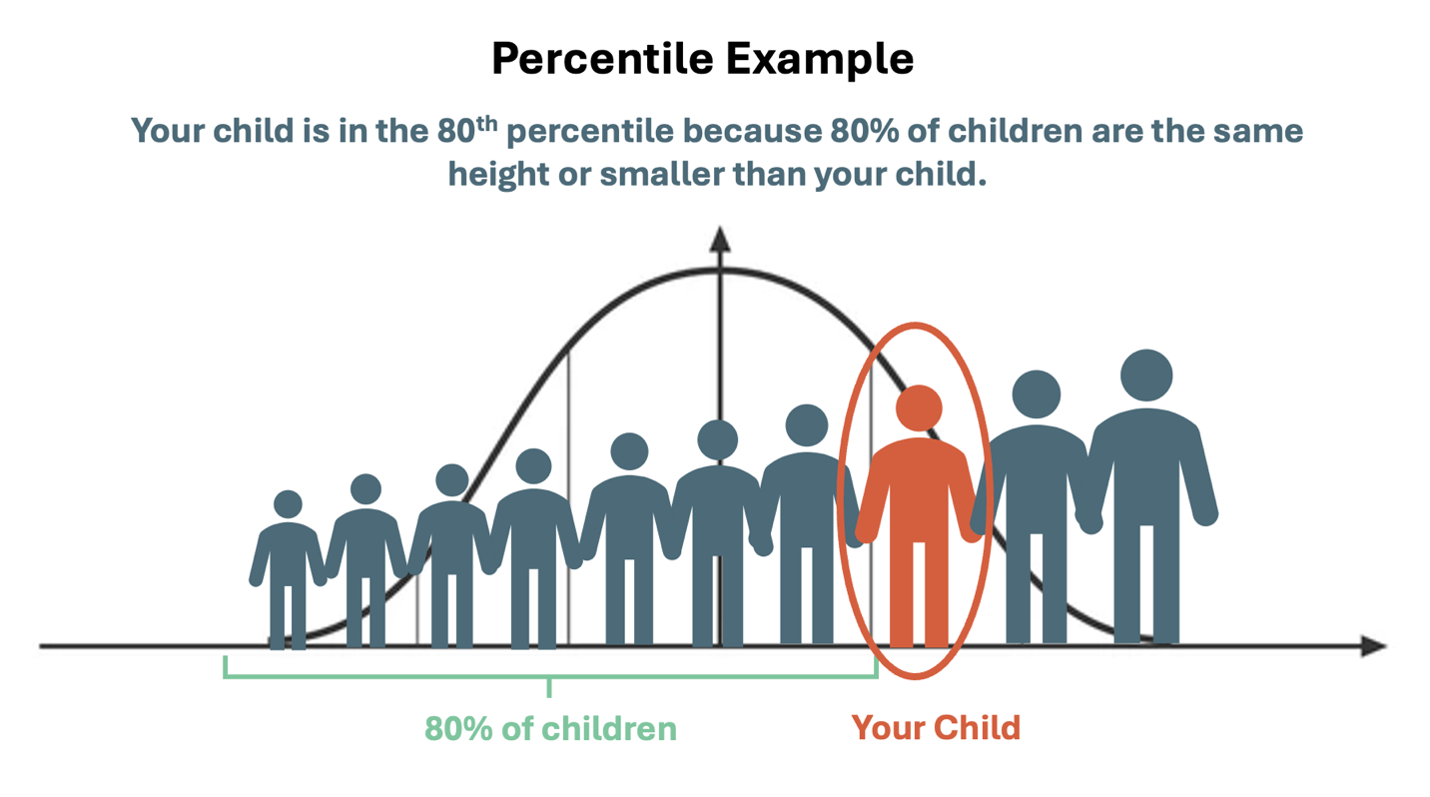
Percentiles are therefore heavily affected by the nature of the baseline dataset. Very wide data sets produce highly variable percentiles, while narrow data sets produce less variability.
If your organization opts to set percentiles as the minimum, midpoint and maximum of your range, you run the risk of administering pay inconsistently. You may find some employees would receive very small increases between the 25th and 50th while others may have massive increases between the same percentiles. You may also find that while some jobs have similar rates at the 50th percentile, the 75th percentiles are drastically different between jobs.
Our Recommendation
For these reasons, Valliant Consulting Group recommends basing pay around a single percentile aligned with your compensation strategy. Most organizations opt to match the market and thereby center on the 50th percentile. All employees are then paid within a range of the 50th percentile. This approach supports both market competitiveness and internal consistency.
Strengthen Your Salary Structure
Want more valuable insights about designing a strong salary structure for your organization?